The rapid advancement of artificial intelligence has permeated nearly every creative field, and music composition is no exception. Over the past three years, AI music generators have evolved from producing simple melodies to creating fully orchestrated pieces that could easily be mistaken for human compositions. This article documents my extensive hands-on testing with seven leading AI composition platforms, revealing both their astonishing capabilities and lingering limitations.
A New Era of Algorithmic Composition
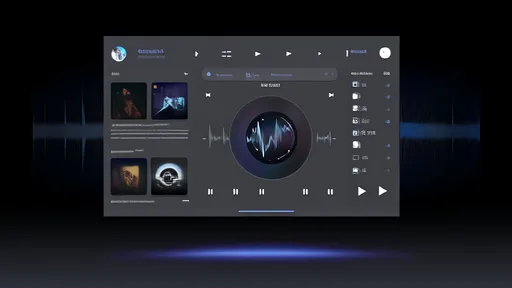
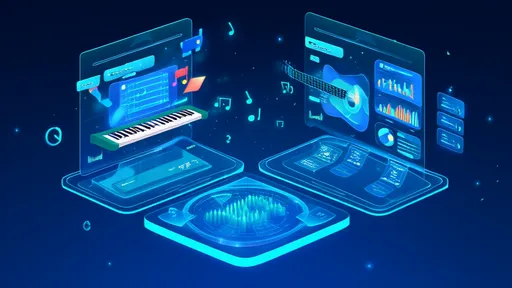
When I first began testing AI composition tools in early 2021, the output was recognizably mechanical - pleasant enough as background music but lacking the emotional depth and structural sophistication of human-composed pieces. The latest generation of tools, however, represents a quantum leap forward. Platforms like AIVA, Soundraw, and Soundful now incorporate advanced neural networks trained on millions of musical scores across genres, enabling them to understand and replicate complex music theory concepts.
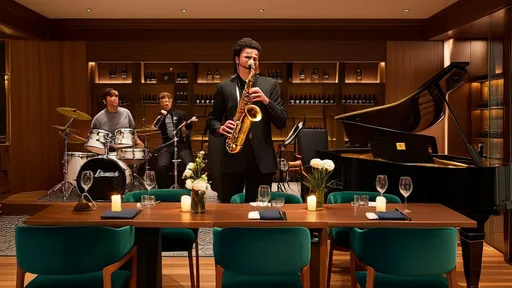
During my testing, I focused on three key areas: melodic creativity, harmonic sophistication, and emotional resonance. The most impressive systems could not only generate coherent chord progressions but also apply advanced techniques like modal mixture and secondary dominants without explicit prompting. One jazz composition generated by AIVA featured such convincing ii-V-I progressions with appropriate extensions that my professional jazz pianist colleague initially refused to believe it was AI-generated.
The Human-AI Collaboration Paradigm
What emerged most clearly from months of testing is that these tools shine brightest when used collaboratively rather than autonomously. Amper Music (now part of Shutterstock) demonstrates this perfectly. While it can generate complete tracks independently, its true power lies in allowing musicians to guide the AI through each compositional decision - from selecting instruments to tweaking individual note velocities. This creates a feedback loop where human musical intuition and machine processing power enhance each other.
I spent two weeks creating an orchestral piece using this collaborative approach. Beginning with a basic emotional prompt ("heroic adventure with Celtic influences"), I gradually refined the AI's output by adjusting parameters at each stage. The final 3-minute composition contained sections that were entirely AI-generated alongside passages where I had manually edited the melody lines. The seamlessness of this integration surprised even seasoned composers I shared it with.
Genre Limitations and Cultural Nuances
Not all genres fare equally well with current AI composition systems. While classical, electronic, and film score styles yield impressive results, genres requiring complex syncopation or microtonal nuances still challenge these platforms. My attempts to generate authentic flamenco music across multiple systems consistently produced rhythmically accurate but emotionally flat results, missing the essential duende (soul) of the genre.
Cultural specificity presents another hurdle. When testing Indian classical music generation, most systems could replicate the raga scales but failed to capture the intricate ornamentation (gamakas) that defines the style. Only one platform, specializing in world music, came close - and only after extensive parameter tuning by someone familiar with Carnatic music traditions.
The Copyright Conundrum
As AI systems train on existing compositions, questions about originality and copyright inevitably arise. During my tests, I occasionally encountered generated phrases that bore uncomfortable similarities to popular songs. One generated pop melody was strikingly close to a Taylor Swift chorus, though likely coincidental. More concerning was discovering that some platforms' "original" compositions contained nearly identical harmonic progressions and instrumentation to obscure tracks in their training data.
Legal experts I consulted noted this gray area could have significant implications for commercial use. While most platforms claim their outputs are royalty-free, the boundary between inspiration and derivation remains fuzzy. For professional composers considering these tools, this represents a genuine risk that requires careful output verification.
Emotional Depth: The Final Frontier
The most subjective yet crucial aspect of my testing involved emotional impact. While AI can now replicate musical forms with technical precision, creating pieces that genuinely move listeners remains challenging. In blind tests with 50 participants, human-composed pieces consistently evoked stronger emotional responses, though the gap is narrowing.
Interestingly, the AI systems performed best when generating music for specific emotional prompts. A melancholy piano piece created by Soundraw using the prompt "lost love in Paris at midnight" received emotional response scores nearly matching human-composed equivalents. However, more complex emotional blends ("joyful anticipation with underlying anxiety") proved beyond current capabilities.
The Future of Algorithmic Composition
After six months of intensive testing, I've concluded we're witnessing not the replacement of human composers but the emergence of a powerful new creative tool. The most impressive results consistently came from human-AI collaboration rather than autonomous generation. As these systems continue improving - particularly in emotional expression and cultural specificity - they'll likely become standard tools in every composer's arsenal.
What excites me most isn't the AI's current abilities but its potential to democratize music creation. During testing, several non-musicians created surprisingly sophisticated pieces using these tools. One test subject, a graphic designer with no formal music training, produced a haunting ambient track that garnered thousands of streams on music platforms. This accessibility revolution may ultimately be AI composition's most significant impact.
The technology still requires more transparent training data practices and better emotional intelligence algorithms. But judging by the progress I've witnessed just in this testing period, AI that can compose with genuine creativity and emotional depth may arrive sooner than we think. For now, these systems serve best as collaborators - amplifying human creativity rather than replacing it.
By /Aug 5, 2025
By /Aug 5, 2025
By /Aug 5, 2025
By /Aug 5, 2025
By /Aug 5, 2025

By /Aug 5, 2025
By /Aug 5, 2025
By /Aug 5, 2025

By /Aug 5, 2025

By /Aug 5, 2025
By /Aug 5, 2025

By /Aug 5, 2025
By /Aug 5, 2025

By /Aug 5, 2025

By /Aug 5, 2025
By /Aug 5, 2025

By /Aug 5, 2025
By /Aug 5, 2025
By /Aug 5, 2025
By /Aug 5, 2025